Your Trusted Resource for Simple, Confident Indoor Plant Care
Indoor plant care should feel calming — not confusing.
At Potted Patch, we simplify plant care so you can grow healthy, thriving plants without second-guessing every step. Whether you're new to houseplants or improving your routine, our guides are designed to give you clear, practical direction.
Read More
Potted Patch is an independent educational resource focused on indoor plant care, container gardening, and plant health. The site is created and maintained by a long-time web developer and plant enthusiast, with a focus on turning complex plant care advice into simple, actionable guidance.
We cover essential topics like watering, light, plant placement, repotting, soil selection, and diagnosing common plant problems. Every article is written in plain language with real-world application in mind, so you can confidently care for your plants in everyday indoor environments.
Our goal is to help you understand not just what to do, but why it works — making plant care more intuitive over time.
Potted Patch is committed to providing accurate, trustworthy information for educational purposes. Plant care outcomes may vary depending on your environment, but our guidance is designed to help you make confident, informed decisions.
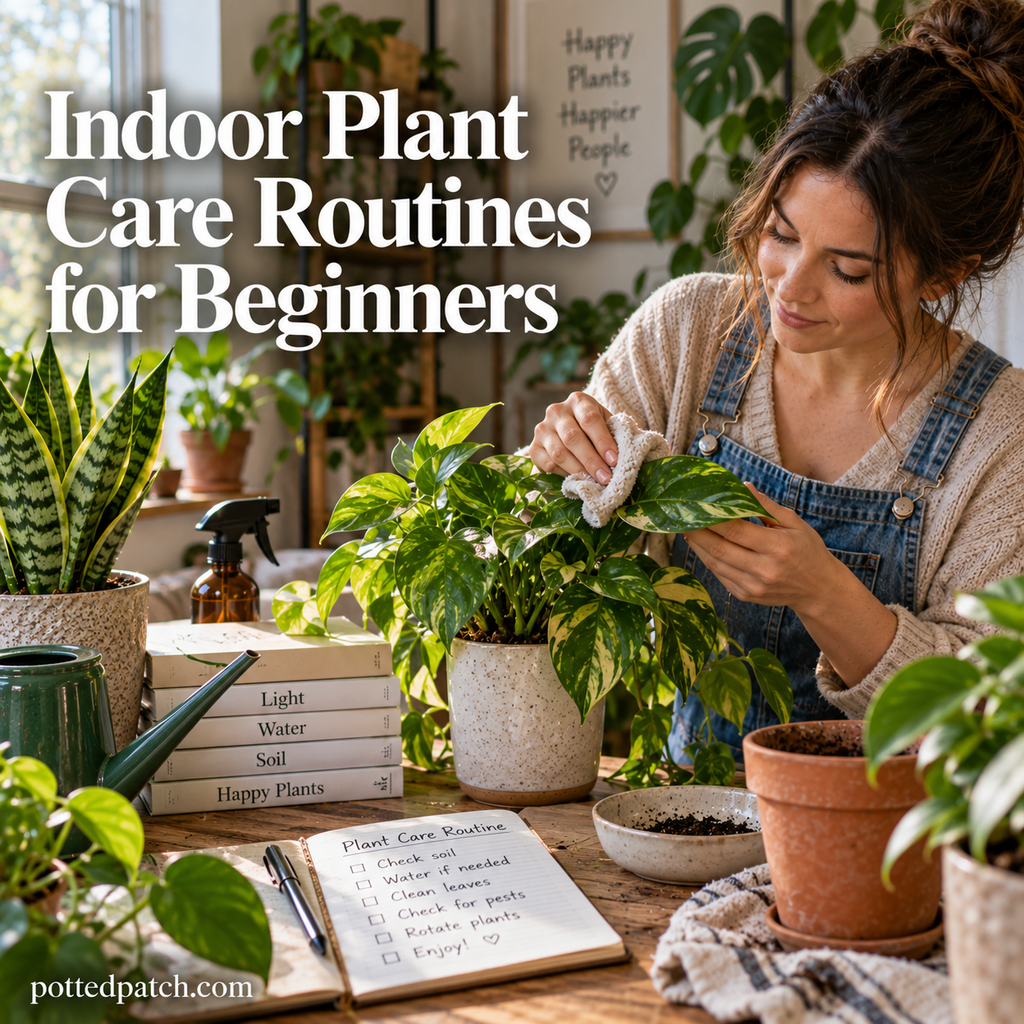
A simple indoor plant care routine makes it easier to stay on top of watering, leaf cleaning, pest checks, and other basic maintenance.
A good beginner plant-care routine isn’t a calendar telling you when every plant gets water, fertilizer, or a larger pot. I would use a regular schedule to check plants, then let soil moisture, new growth, light, temperature, and the plant’s condition determine what actually needs to be done.
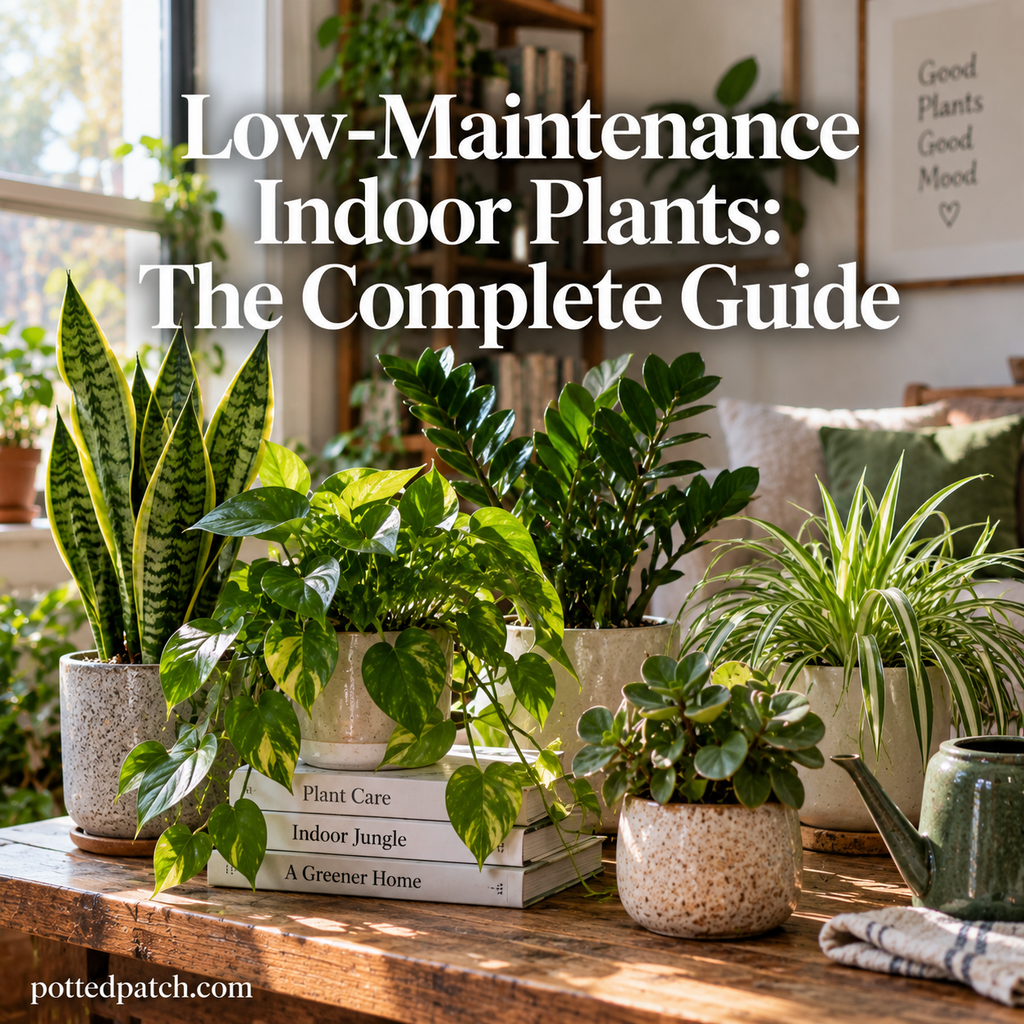
Low-maintenance houseplants such as snake plants, pothos, ZZ plants, and spider plants bring easy-care greenery into the home.
A low-maintenance houseplant isn’t one you can ignore indefinitely. I think of it as a plant that fits ordinary indoor conditions, doesn’t demand constant intervention, and gives you some margin for an occasional late watering or other small care mistake.
Apartment-friendly houseplants can add greenery without taking up too much space or requiring permanent changes.
The best apartment plant isn’t necessarily the smallest or the hardest to kill. I would start with the apartment itself—especially its windows, usable surfaces, pets, and how quickly pots dry there—then choose plants that actually fit those conditions.
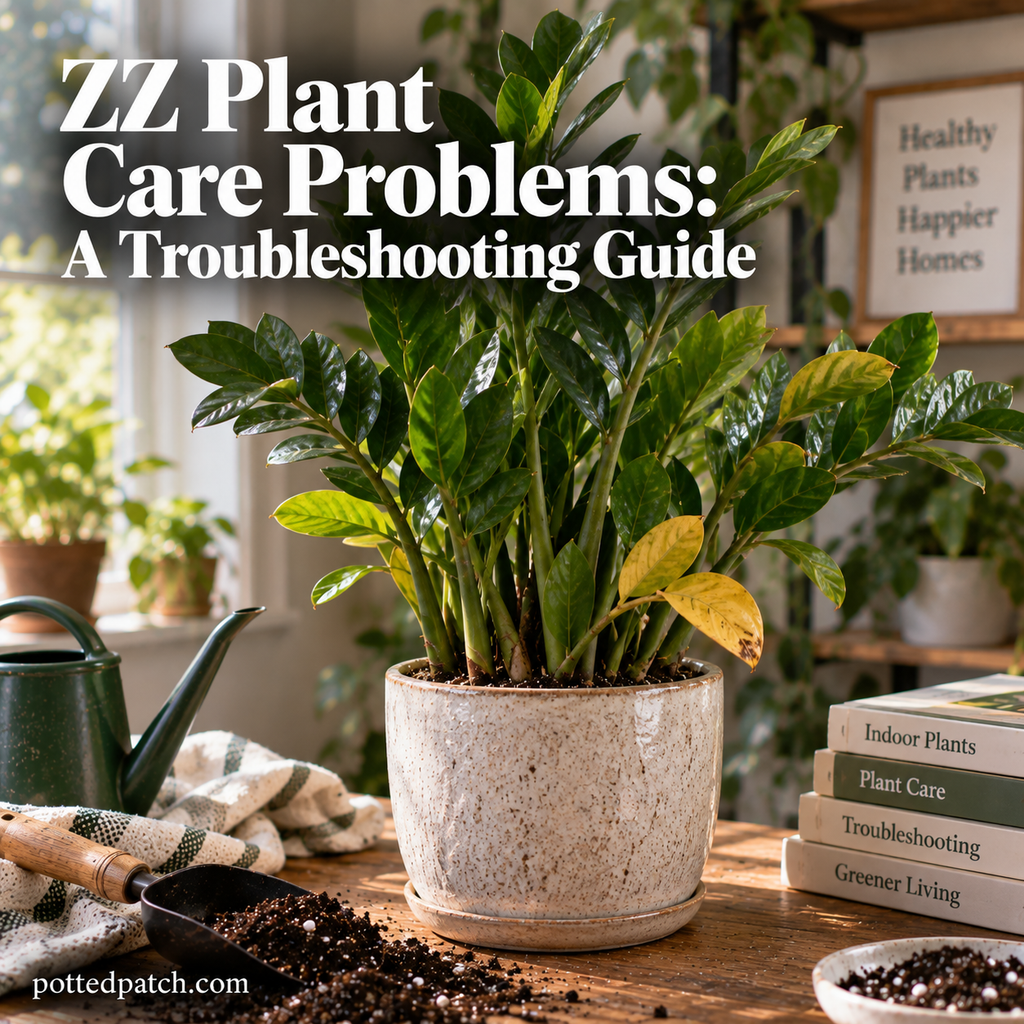
ZZ plant with yellowing and damaged leaves showing common care problems
ZZ Plants can look healthy for quite a while even when something is beginning to go wrong below the soil, so I wouldn’t diagnose one from a single yellow leaflet or leaning stem. I would start with soil moisture, how long the pot has stayed wet or dry, stem firmness, and—when symptoms justify it—the condition of the roots and thick underground rhizomes.
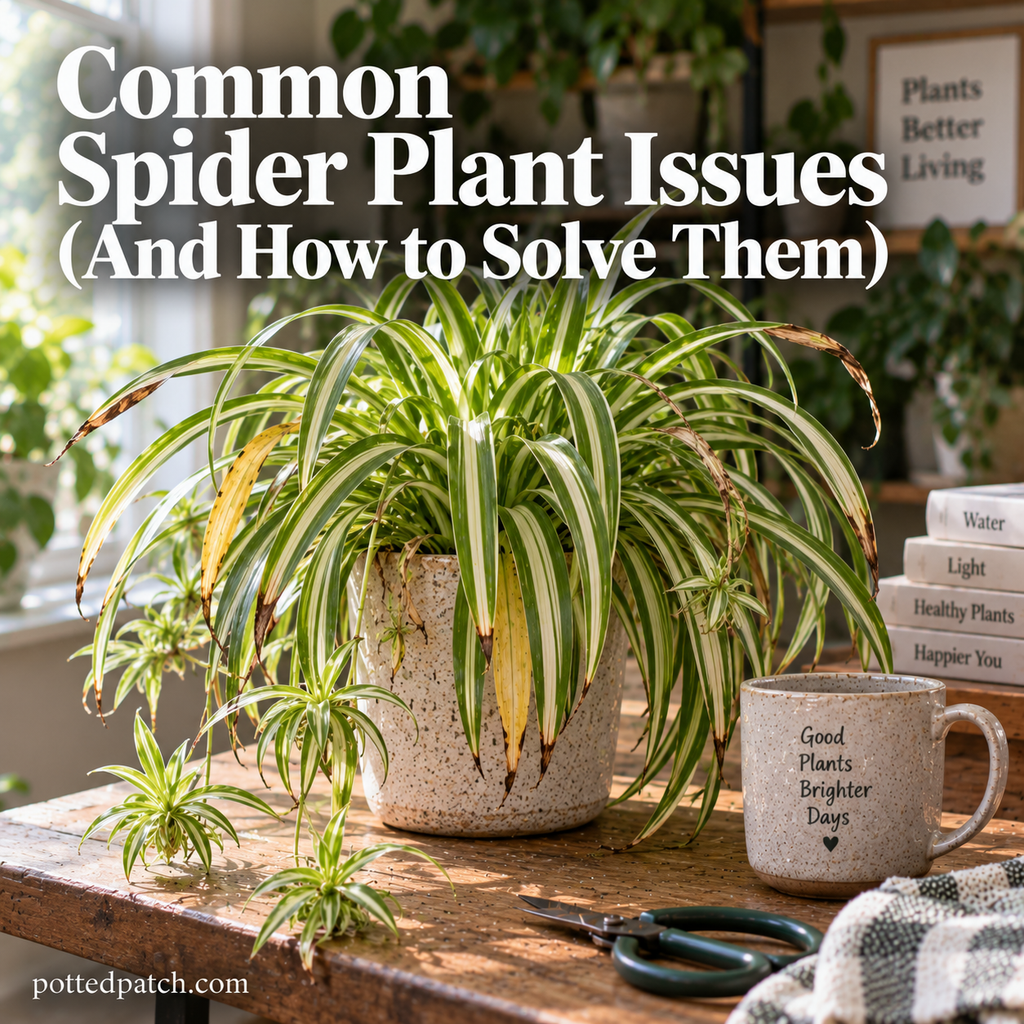
Brown tips, yellow leaves, drooping foliage, and weak growth can provide useful clues when troubleshooting spider plant problems.
Spider Plant problems are easiest to diagnose by looking at combinations of clues rather than one damaged leaf. I would start with soil moisture, how quickly the pot has been drying, the firmness of the plant’s thick roots and crown, the pattern of damage, and whether healthy new foliage is still developing.
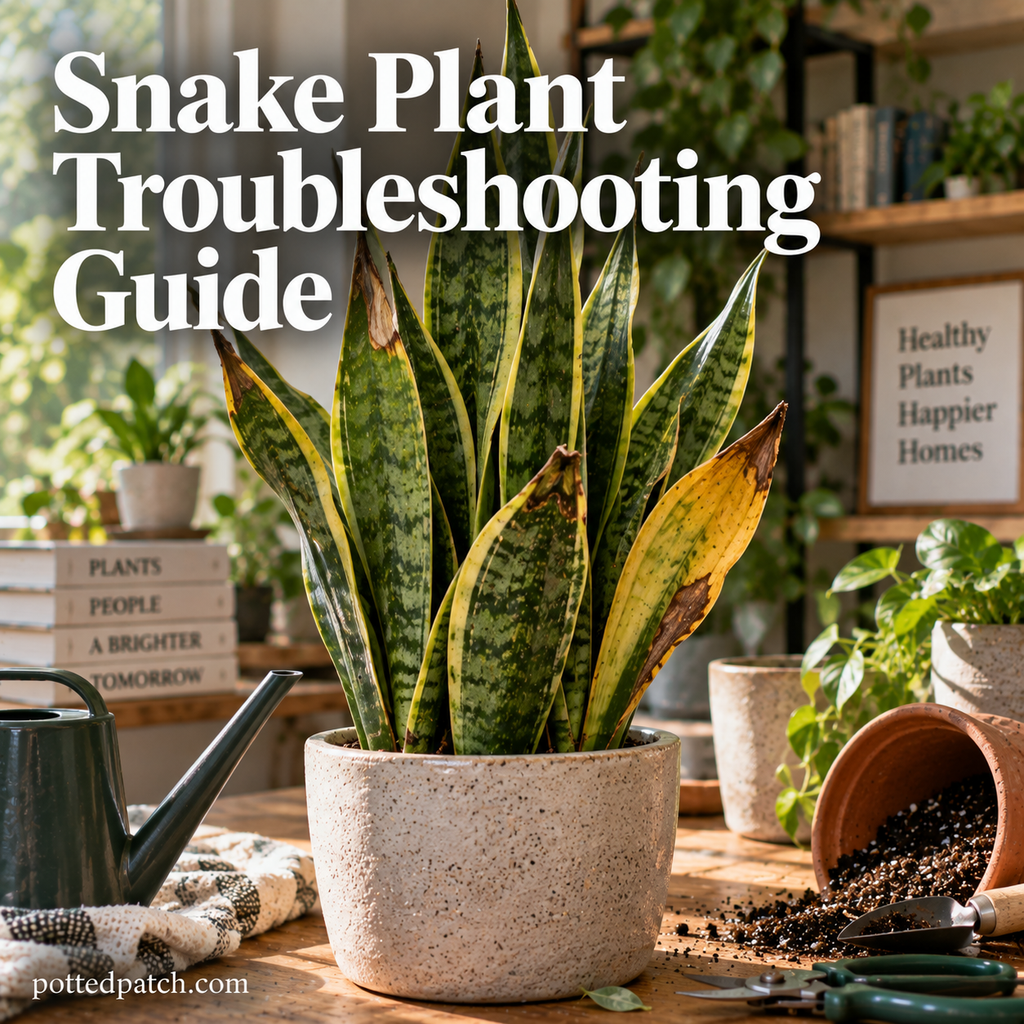
Yellow leaves, brown tips, drooping, and soft foliage can provide useful clues when troubleshooting a struggling snake plant.
Snake Plant symptoms can be misleading: drooping or curling can happen when the plant is extremely dry, but similar symptoms can appear when wet, damaged roots can no longer function properly. This guide uses the clues I would check first—soil moisture, drying time, leaf-base firmness, roots and rhizomes, damage pattern, and new growth—to narrow down the actual problem before trying to fix it.
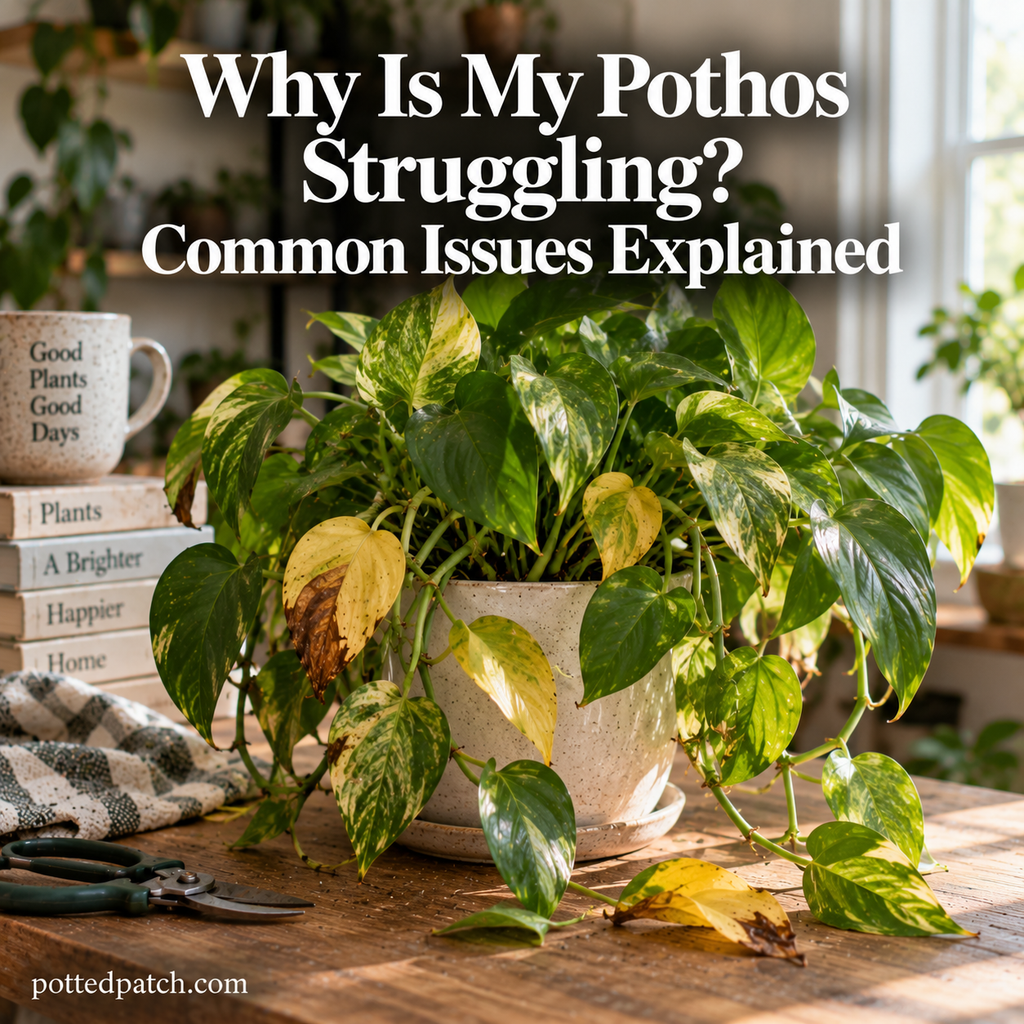
Yellow leaves, brown patches, drooping vines, and declining growth can help reveal what’s causing a pothos to struggle.
Pothos problems are easy to misdiagnose because opposite conditions can produce nearly identical symptoms: a plant can droop because it is extremely dry or because damaged roots are sitting in wet soil. This guide focuses on the clues I would check first—soil moisture, drying time, roots, stem condition, damage pattern, and new growth—before deciding what actually needs fixing.
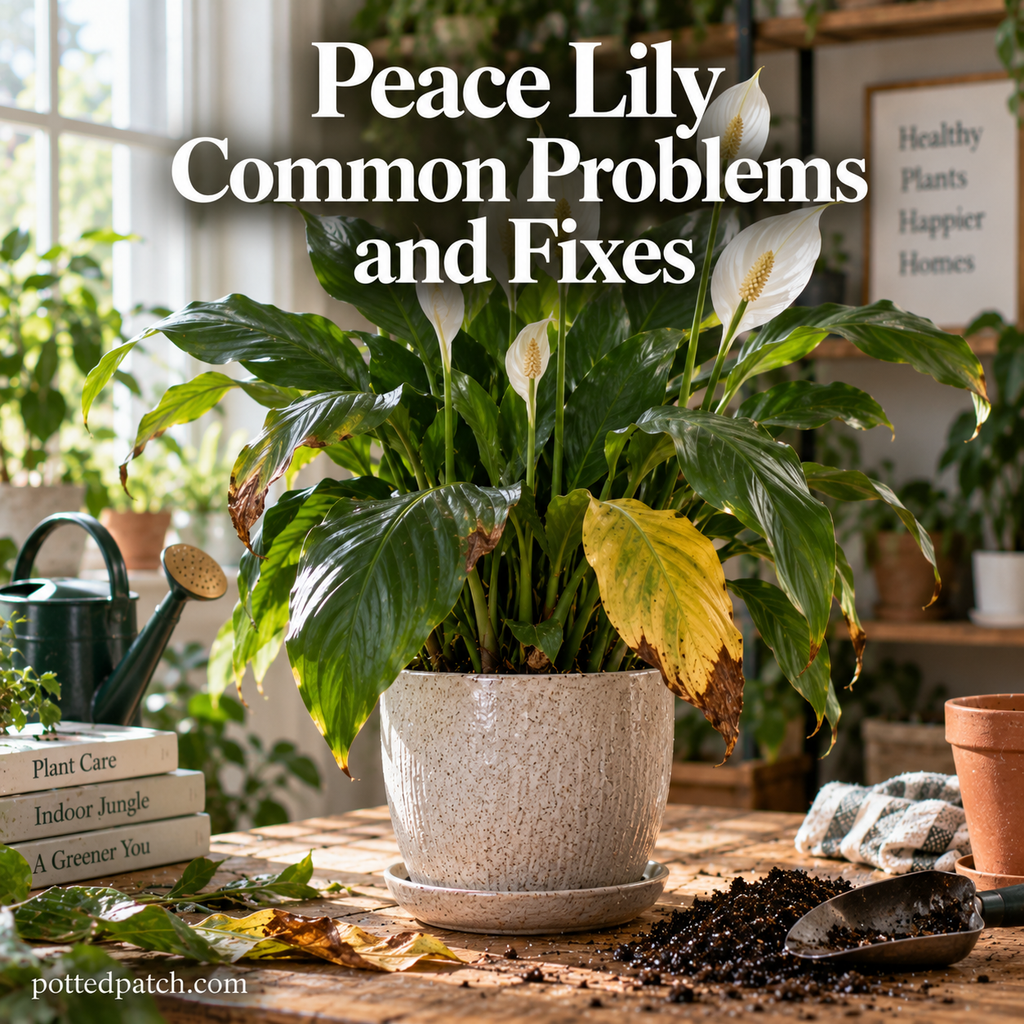
Yellow leaves, brown tips, drooping, and damaged foliage can provide useful clues when diagnosing common peace lily problems.
Peace lilies can show the same symptom for very different reasons, so the first question shouldn’t be “What should I add?” but “What changed?” This guide uses soil moisture, root condition, damage pattern, new growth, and recent changes to narrow down common Peace Lily problems before you start treating them.
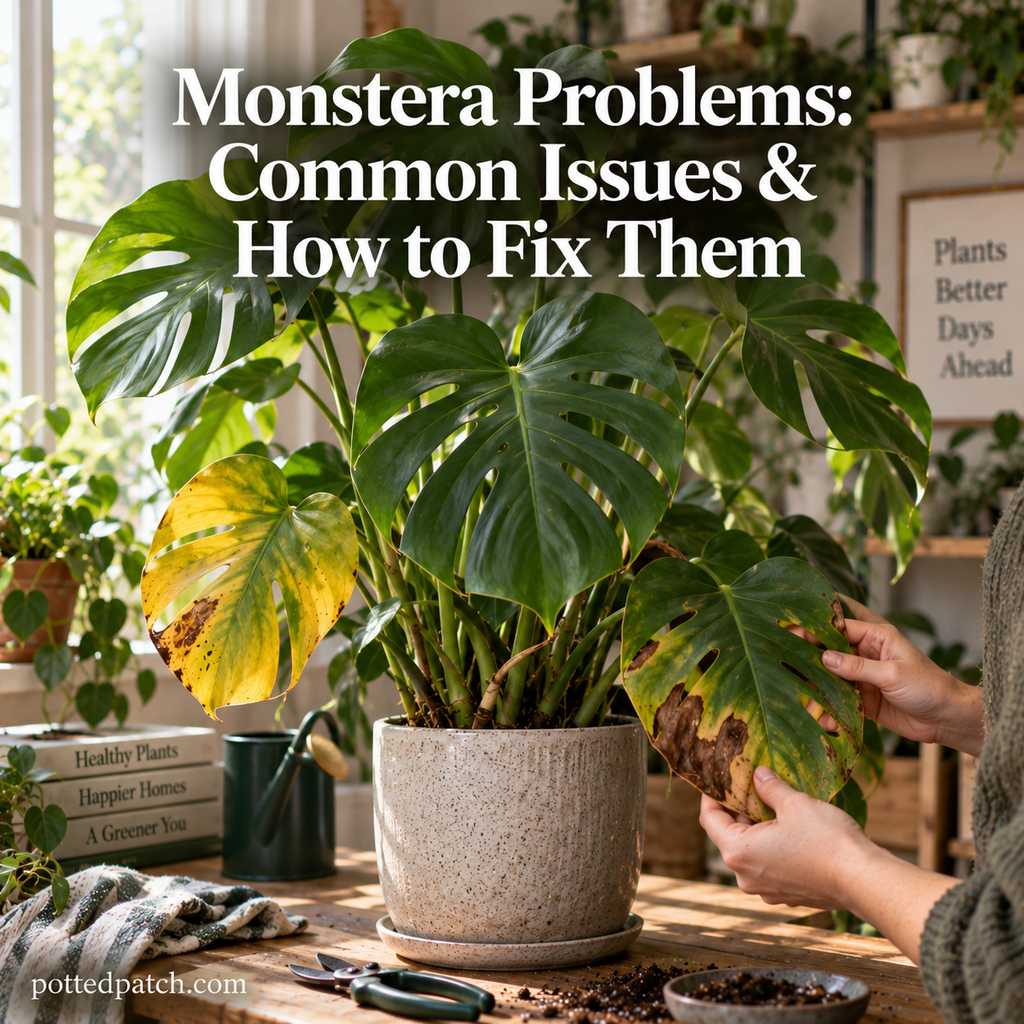
Yellowing, brown spots, and damaged Monstera leaves can point to watering, root, light, or environmental problems that need closer inspection.
Most Monstera problems become easier to diagnose once you stop looking at the damaged leaf by itself. Yellowing, curling, drooping, and even wilting can have opposite causes, so this guide focuses on the clues that actually separate one problem from another: soil moisture, root condition, light, recent changes, and where the damage appears.
For normal light, watering, soil, and seasonal care, use the complete Monstera care guide. This page is specifically for figuring out what has gone wrong and what to do next.
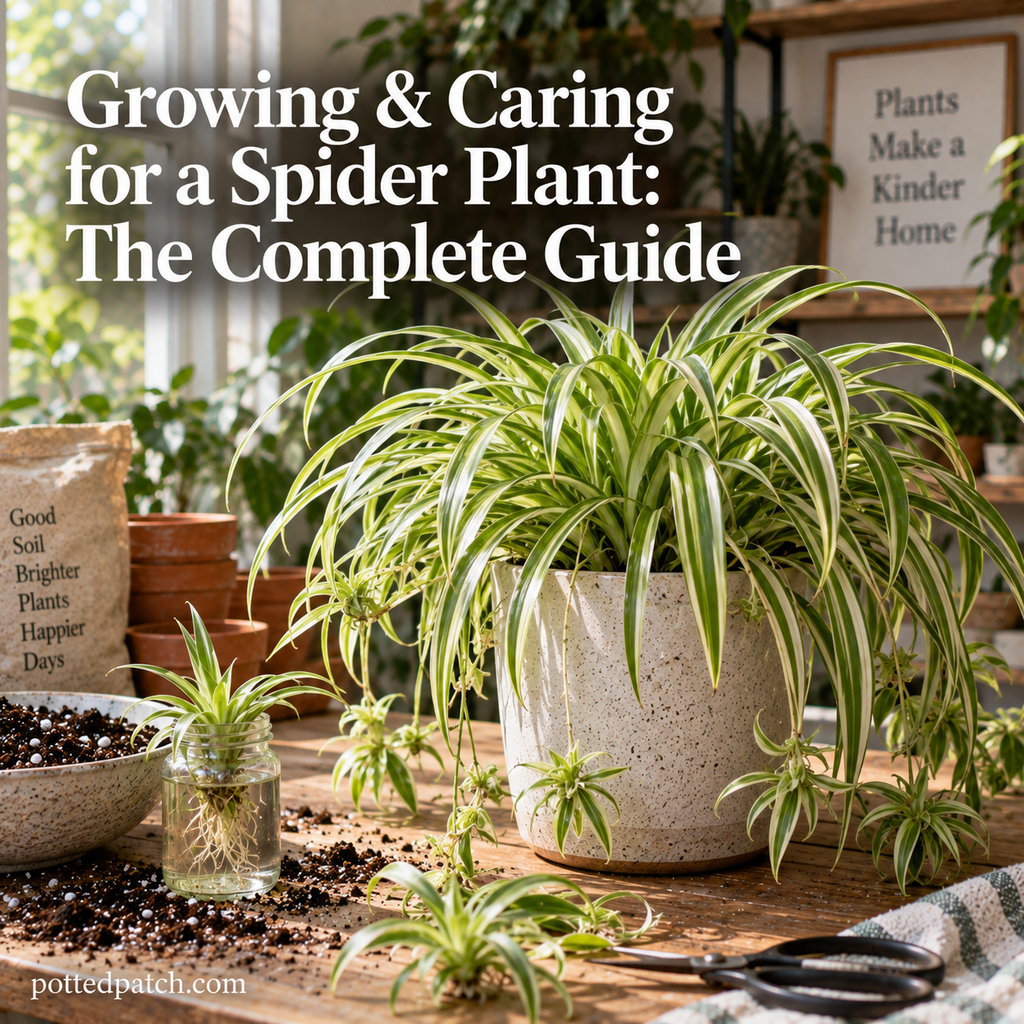
A healthy spider plant can produce cascading spiderettes when given bright indirect light, proper watering, and suitable growing conditions.
Spider Plants (Chlorophytum comosum) are forgiving, but the best-looking plants aren’t simply being left alone. I would judge their care by a few observable clues: how quickly the soil dries, whether new leaves are coming in strong, how crowded the thick roots have become, and whether a mature plant is producing the long stems and spiderettes it’s known for.